Can what you eat protect your skin from the sun? A little, it seems, and the food in question is a pleasure to eat. Tomatoes, pink grapefruit, watermelon and papaya get their red and pink colour from lycopene, a carotenoid that researchers have studied for its effect on sun-damaged skin.
The original version of this post claimed lycopene could "block UV light" and prevent skin cancer. That goes well beyond the evidence. Here's the honest picture, and three summer recipes worth making anyway.
Directions for use
- Lycopene is found in tomatoes (especially cooked), pink grapefruit, watermelon, papaya and guava.
- In a small trial, people who ate tomato paste daily for 12 weeks had somewhat less skin reddening after UV exposure.
- That effect is modest. Food is a bonus, never a replacement for sunscreen, shade and covering up.
- Cooking tomatoes with olive oil makes lycopene easier for the body to absorb.
What the research shows
In a study published in the British Journal of Dermatology, women who ate about 55 g of tomato paste with olive oil every day for 12 weeks showed less redness after controlled UV exposure than those who ate olive oil alone, along with some markers of less skin damage. It's a promising result, but the study was small and the protection was roughly comparable to a very low-factor sunscreen.
Vitamin C matters too. The body uses it to make collagen, the protein that keeps skin firm, and it's an antioxidant. Papaya, grapefruit, tomatoes and peppers are all good sources.
The takeaway: eat these foods because they're good for you, and keep using sunscreen.
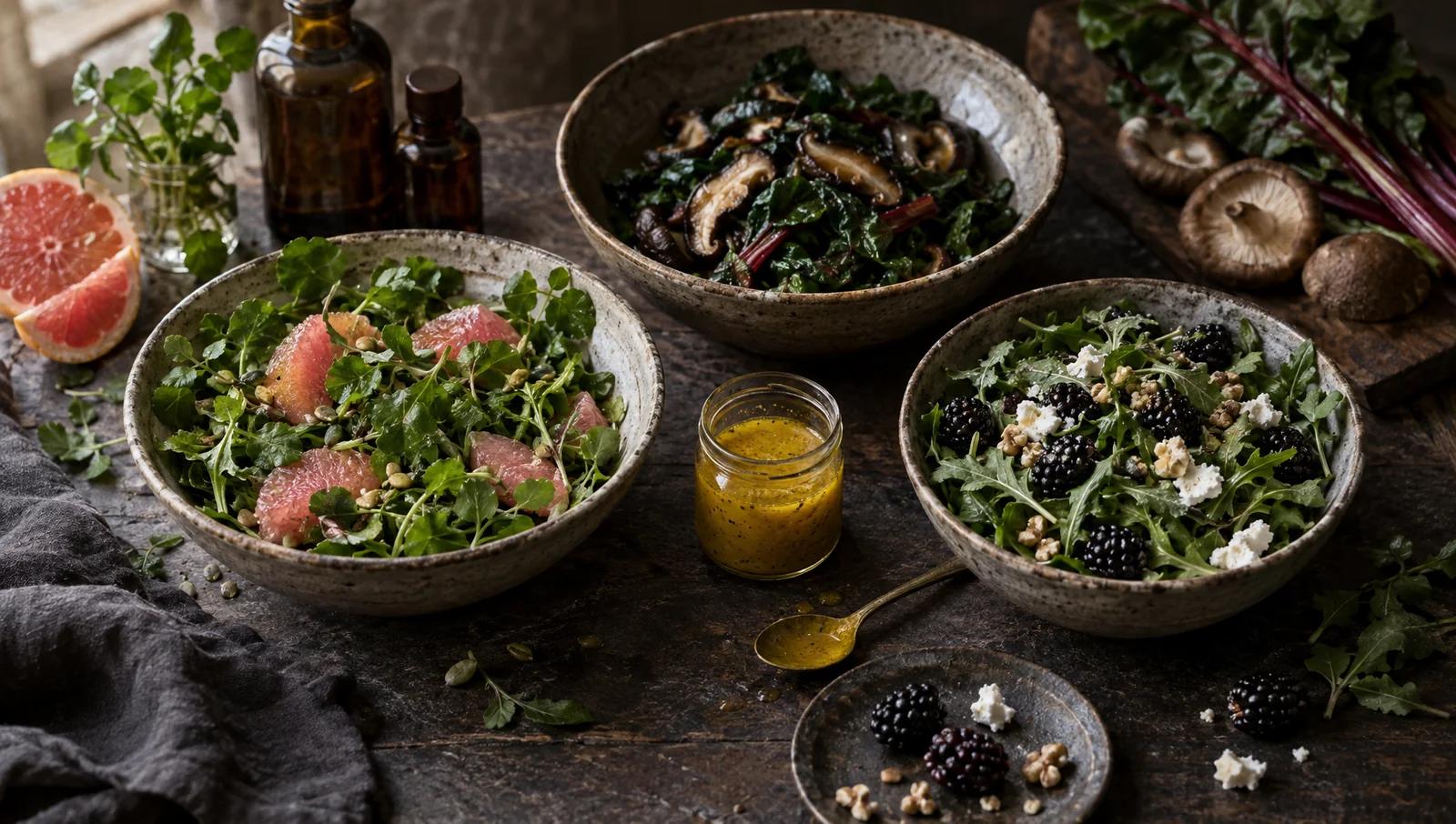
1. Pink grapefruit, avocado and walnut salad
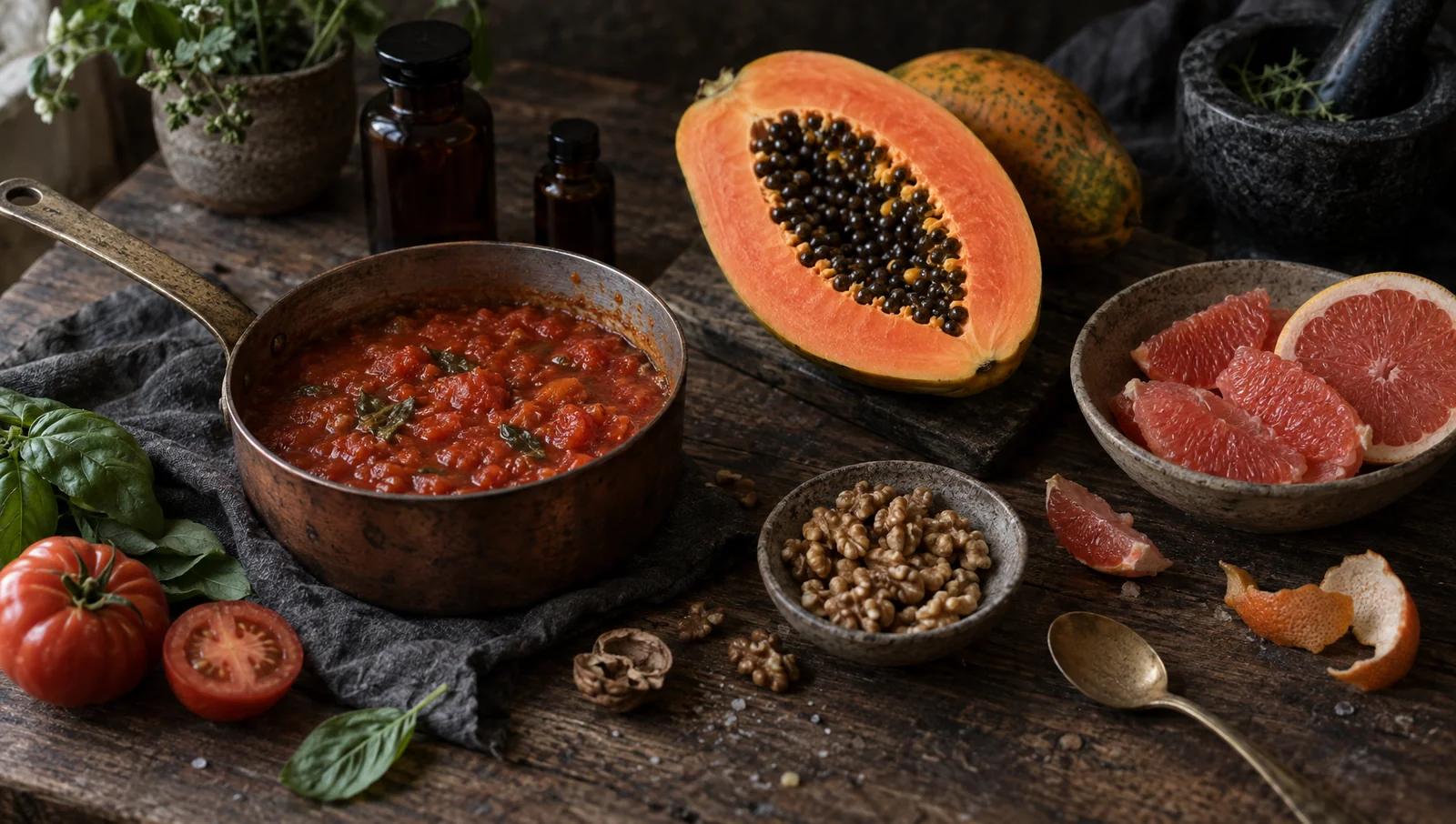
2. Slow tomato and mushroom sauce
This sauce is the best lycopene source here. Cooking breaks down the tomato's cell walls, and the olive oil helps you absorb the lycopene, which is fat-soluble. Make a double batch and freeze half.
3. Papaya breakfast fruit salad
Papaya is one of the richest fruit sources of vitamin C, and a cup covers more than a day's needs. Add a spoonful of Greek yoghurt for protein.
Sun protection that works
The American Academy of Dermatology recommends:
- A broad-spectrum sunscreen, SPF 30 or higher, on all exposed skin, reapplied every two hours and after swimming or sweating.
- Shade between 10 a.m. and 4 p.m., when the sun is strongest.
- Covering up with a wide-brimmed hat, sunglasses and lightweight long sleeves.
Food works alongside these, not instead of them.
A note of caution
Grapefruit interacts with many common medicines, including some statins, blood-pressure drugs and anti-anxiety medicines. If you take any regular medication, ask your pharmacist before eating grapefruit, or use oranges. Check your skin regularly and see a doctor about any mole or spot that is new, changing, bleeding or not healing.
The bottom line
Tomato sauce, pink grapefruit and papaya give your skin lycopene and vitamin C, and early research suggests a modest benefit against sun damage. Enjoy them all summer, and keep the sunscreen, hat and shade too.