A salad has a reputation as the thing you eat when you're being "good" and then feel hungry an hour later. That happens when a salad is a few leaves and a splash of dressing. Build it properly, with something crunchy, something creamy and some protein or healthy fat, and a salad becomes a full meal.
These three salads come from the original site's summer archive. The earlier version claimed they would "dissolve fat", cleanse the intestines and lower cholesterol. We've dropped those claims. What's left are three genuinely good salads that are filling, colourful and quick.
Directions for use
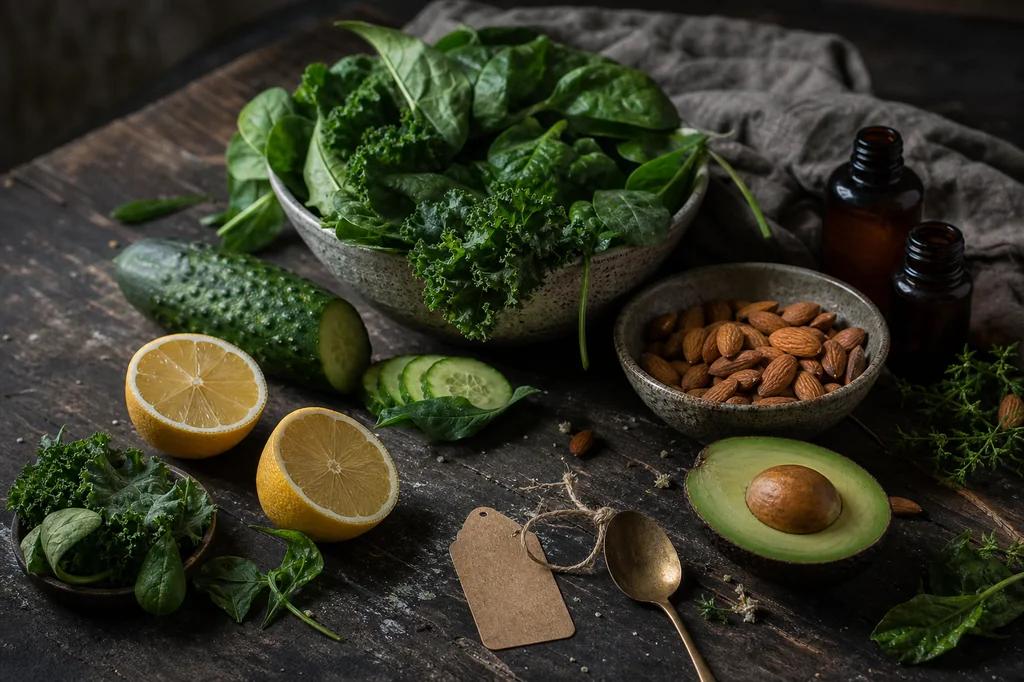
- A filling salad needs volume (leaves and vegetables), fat (avocado, nuts, olive oil) and ideally protein (cheese, eggs, beans, fish).
- Leafy greens, avocado and radishes are rich in potassium, which helps the body balance salt.
- Grapefruit interacts with many common medicines. Check with your pharmacist before eating it if you take any regular medication.
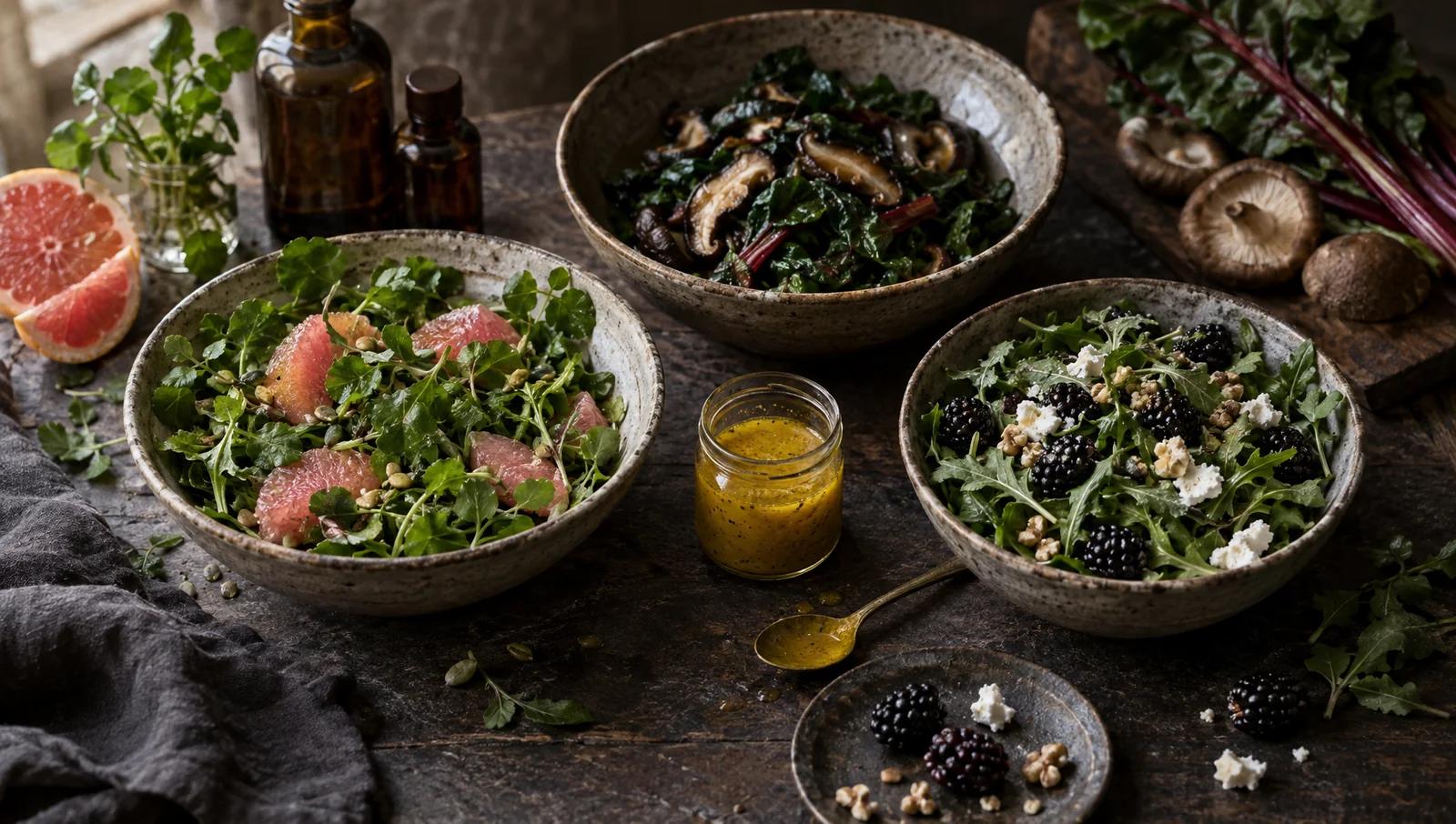
- Make the turmeric dressing once and keep it for the week.
First, the dressing
Black pepper and oil both help the body absorb curcumin, the main compound in turmeric. That said, the amount in a salad dressing is small; enjoy it for the colour and warmth rather than as a remedy.
1. Watercress, radish and grapefruit
Peppery watercress and radish against sweet, sharp grapefruit is a classic pairing. Add a couple of boiled eggs or some flaked salmon to turn it into a main meal. If grapefruit is off the table for you (see the note below), oranges work just as well.
2. Warm Swiss chard, courgette and shiitake
A warm salad is a good option when the weather turns and cold leaves feel unappealing. It's lovely with a spoonful of hummus, a fried egg or some cooked lentils.
3. Arugula, summer squash and blackberries
Blackberries are one of the most fibre-rich fruits, and the cheese gives this salad staying power.
Why these salads fill you up
Mayo Clinic's advice for eating fewer calories without feeling hungry comes down to energy density: choose foods that give a lot of volume for relatively few calories, like vegetables and fruit, and pair them with enough protein and fat to satisfy. A big bowl of salad with a handful of nuts and some cheese or eggs fits that exactly.
Leafy greens, avocado, radishes and squash are also good sources of potassium. The American Heart Association notes that eating more potassium-rich foods helps offset sodium's effect on blood pressure. That's a real benefit, but it comes from the overall pattern of eating more vegetables, not from any one salad.
A note of caution
Grapefruit can change how your body processes many medicines, including some statins, blood-pressure drugs and anti-anxiety medicines, sometimes for more than a day. If you take any regular medication, ask your pharmacist before eating grapefruit, or use oranges instead. If you take warfarin, keep your intake of leafy greens steady from week to week.
The bottom line
A salad keeps you full when it's big, colourful and includes some fat and protein. Keep a jar of dressing in the fridge and one of these three can be on the table in ten minutes.