An omelette is one of the fastest lunches there is: ten minutes, one pan, and whatever vegetables are in the fridge. Made with a generous pile of vegetables and a little healthy fat, it's also one of the most filling.
The original version of this recipe was sold as a "cleansing" omelette that helped the body flush out toxins. We've kept the recipe, because it's a good one, and dropped the cleansing claims. Your liver and kidneys do that work around the clock. What this omelette does well is simpler: it keeps you full, and it gets two or three servings of vegetables into a single meal.
Directions for use
- Eggs bring protein, and protein at lunch helps you stay full through the afternoon.
- Vegetables add bulk for very few calories: that is what makes a meal filling without making it heavy.
- Avocado and olive oil add healthy fat, which helps you absorb the vitamins A and K in the greens and peppers.
- No food "detoxes" you. A varied, vegetable-rich diet simply supports the organs that already do.
The recipe
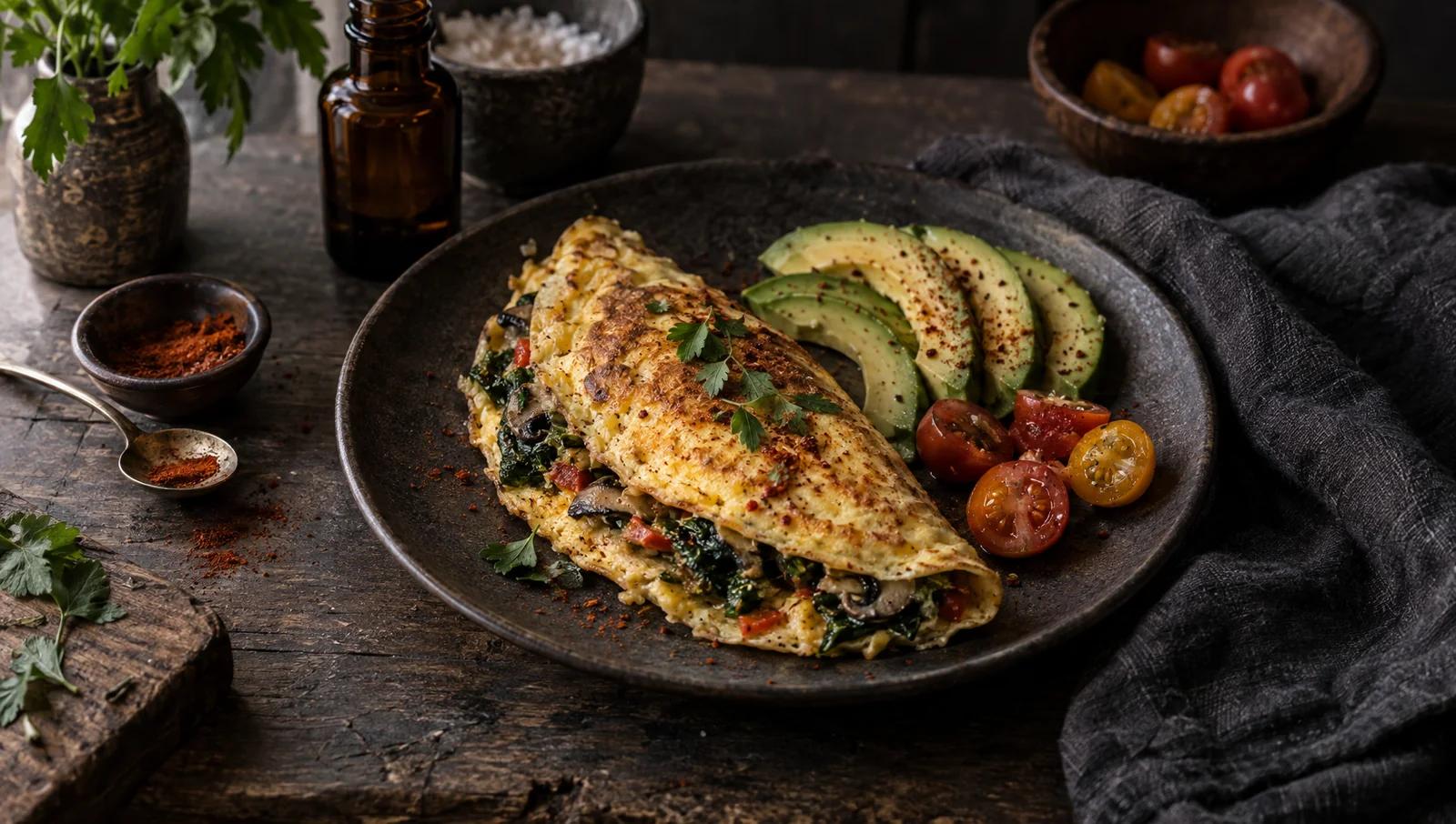
Cooking the vegetables first, then the eggs, keeps the omelette from going watery and lets you pack in far more filling than a classic folded omelette would hold.
Why this lunch keeps you full
Protein. Two or three eggs give you around 12 to 18 grams of protein. Protein is the most filling of the three macronutrients, so a protein-rich lunch makes the 4 p.m. slump and the biscuit tin less tempting.
Volume. Vegetables are mostly water and fibre. Mayo Clinic's advice for feeling full on fewer calories is exactly this: bulk up meals with vegetables, which take up room on the plate and in the stomach without adding many calories.
Fat, in moderation. A little olive oil and half an avocado make the meal satisfying and help you absorb fat-soluble nutrients such as vitamin K from the spinach and beta-carotene from the pepper.
Choline. Egg yolks are one of the richest food sources of choline, a nutrient the body uses for cell membranes, fat transport and the liver. Many people eat less than the recommended amount. It's a good reason not to throw away the yolks.
Swaps and variations
- More vegetables: mushrooms, courgette, kale, asparagus tips and leftover roasted vegetables all work.
- More protein: add a spoonful of cottage cheese, crumbled feta or a handful of cooked beans.
- Egg-white omelette: use 1 whole egg plus 2 or 3 whites if you've been advised to limit dietary cholesterol. You'll lose some of the choline.
- Make it portable: bake the same mixture in a muffin tin (180 °C / 350 °F for about 20 minutes) for grab-and-go egg bites that keep in the fridge for 3 days.
What about the "detox" part?
The original post described this as a cleansing, detoxifying recipe. There's no good evidence that particular foods, cleanses or detox diets remove toxins from the body. The US National Center for Complementary and Integrative Health notes that the few studies on detox programmes are small and poorly designed. Your liver, kidneys, gut and skin already handle waste products very effectively.
What a vegetable-heavy diet does do is give those organs the nutrients they need, and fibre keeps digestion regular. That's the honest version of "detox", and this omelette delivers it.
A note of caution
Cook eggs until the whites are fully set if you're pregnant, over 65 or have a weakened immune system. If you take warfarin, keep your intake of leafy greens such as spinach steady from day to day, and talk to your doctor before changing it.
The bottom line
Two or three eggs, a big handful of vegetables and a little healthy fat make a lunch that takes fifteen minutes and holds you until dinner. It's a simple habit that supports steady weight care far better than any cleanse.