"Hormone balance" is one of the most searched phrases in women's health, and one of the most oversold. Your hormones aren't meant to be perfectly level. They rise and fall across the menstrual cycle and shift gradually through your forties and fifties. What most women want is simpler: to feel like themselves while that happens.
This guide covers what's actually going on, the lifestyle changes with real evidence behind them, and what the "hormone tests" sold online can and can't tell you.
Directions for use
- Perimenopause usually starts in the mid-forties and can last several years. Estrogen and progesterone fluctuate, then fall.
- Hot flashes, poor sleep, mood changes and irregular periods are common and normal, but not something you have to put up with.
- Exercise, sleep habits, a healthy weight, less alcohol and not smoking have the best evidence among lifestyle changes.
- If you're over 45 with typical symptoms, you usually don't need a hormone test to be diagnosed. Saliva tests sold online aren't reliable.
- Hormone therapy and non-hormonal medicines are effective options. Discuss them with your doctor.
What's happening in your body
The National Institute on Aging describes menopause as the point 12 months after your last period. The years leading up to it, perimenopause, are when most symptoms appear. The ovaries gradually produce less estrogen and progesterone, but not smoothly: levels can swing from high to low from one month to the next.
That's why symptoms come and go. Common ones include:
- Hot flashes and night sweats
- Trouble sleeping
- Irregular, heavier or lighter periods
- Mood changes, irritability or low mood
- Vaginal dryness
- Brain fog and forgetfulness
Lifestyle changes with real evidence
Move every day. Regular exercise helps mood, sleep, weight and bone strength, and weight-bearing and strength exercise matter more after menopause, when bone loss speeds up.
Protect your sleep. Keep the bedroom cool, go to bed at a regular time and build a wind-down routine. Our five-minute legs-up-the-wall reset is one easy option.
Know your hot-flash triggers. The NIA lists common ones: alcohol, caffeine, spicy food, hot drinks, stress and warm rooms. Dressing in layers and keeping a fan nearby helps.
Limit alcohol and don't smoke. Both worsen hot flashes, and smoking is linked with earlier menopause.
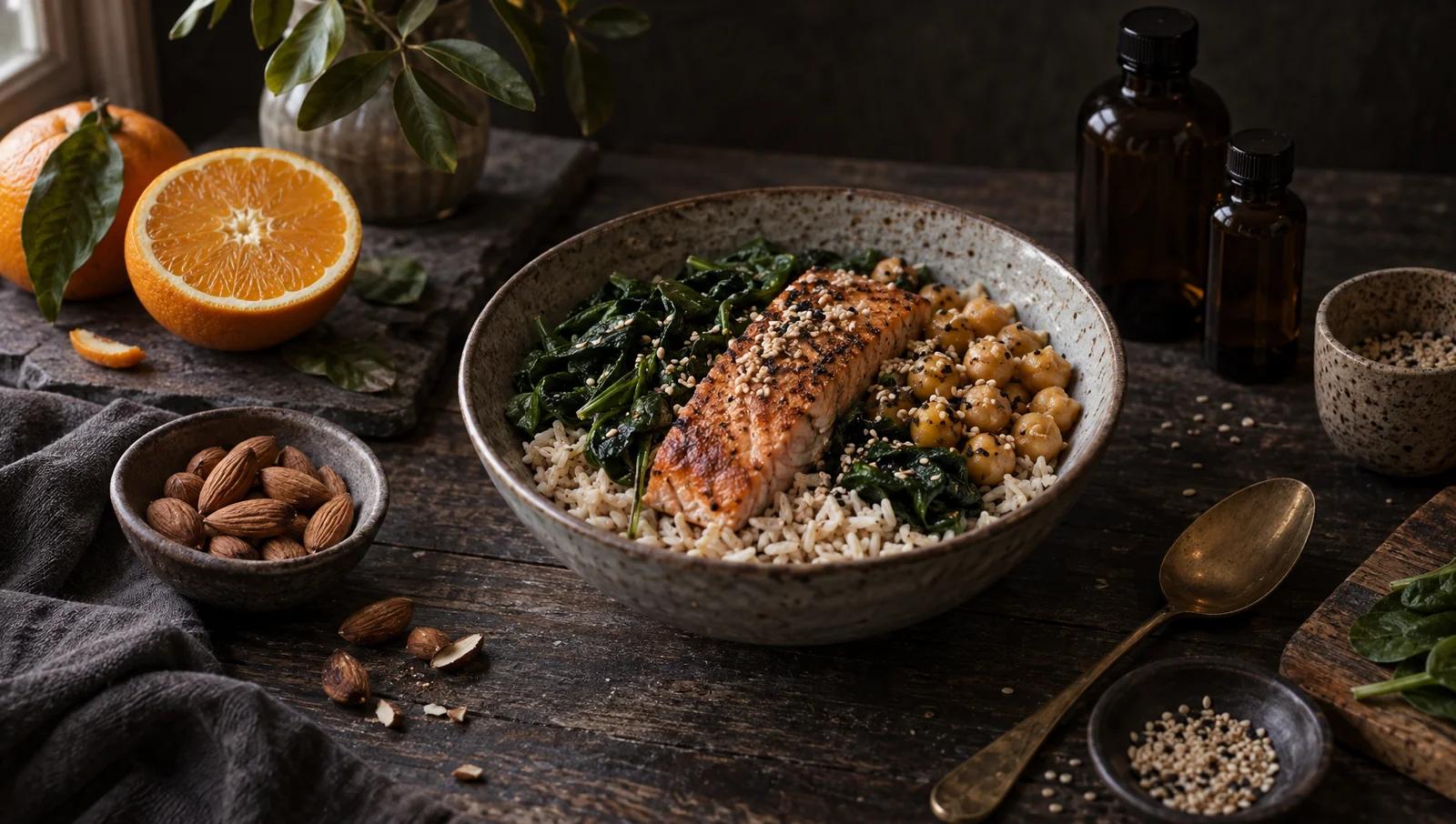
Eat for your heart and bones. Heart disease risk rises after menopause. A diet rich in vegetables, whole grains, beans, fish, nuts and olive oil, with enough calcium and vitamin D, protects both.
Foods people ask about
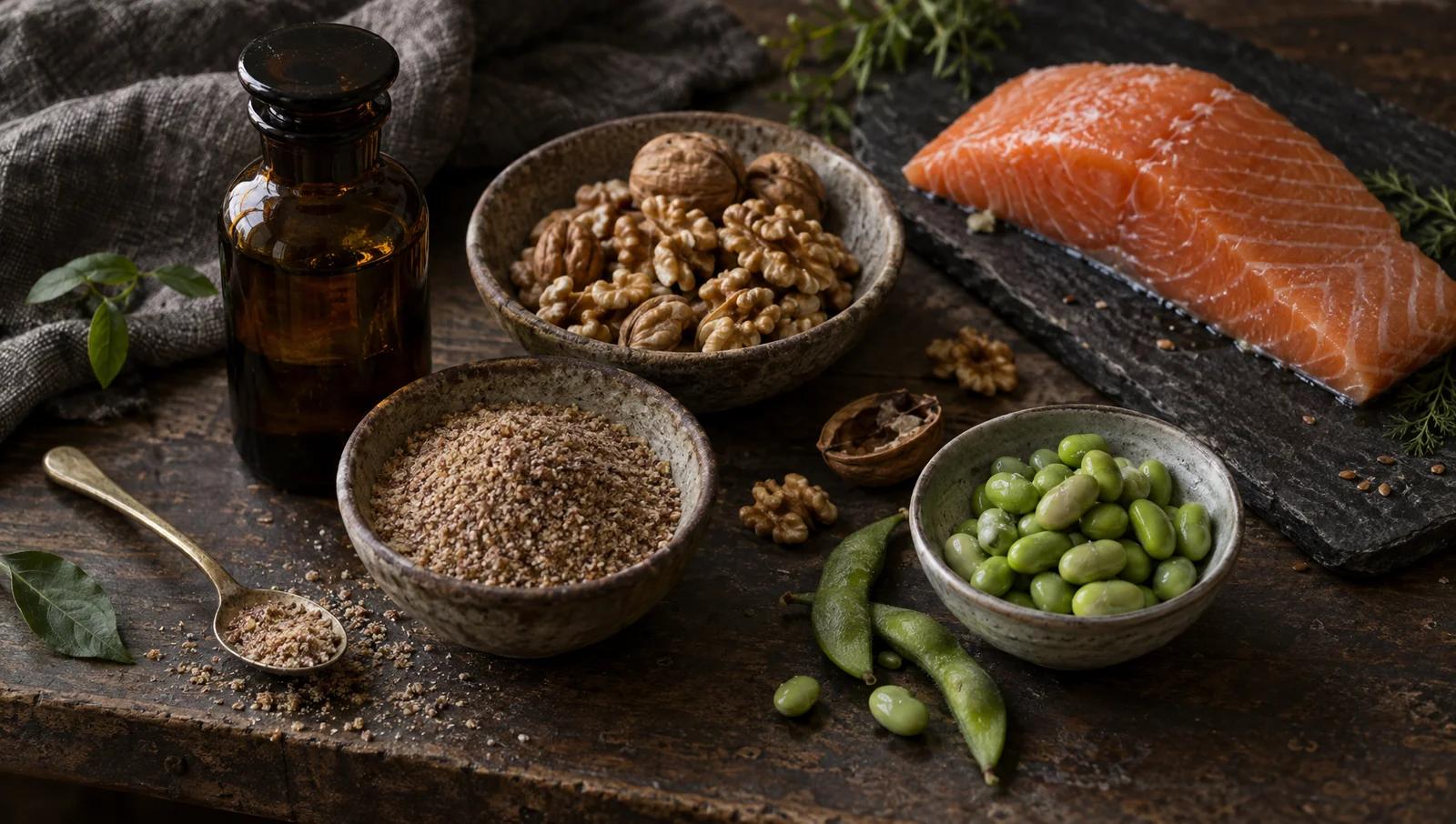
Soy and flaxseed contain plant compounds (isoflavones and lignans) with weak estrogen-like effects. NCCIH reports that soy isoflavones may slightly reduce hot flashes for some women, but results are mixed. Soy foods like edamame and tofu are healthy either way.
Omega-3 fats from oily fish, walnuts and flaxseed support heart health. Evidence that they ease hot flashes is weak.
Cutting sugar and ultra-processed food won't "balance hormones", but it helps with weight, energy and heart health, which all matter more at this stage.
What about hormone tests?
The original version of this post encouraged hormone testing. Here's a more careful answer.
If you're over 45 with typical symptoms, the UK's NICE guideline says perimenopause and menopause can be diagnosed from your symptoms alone, without a blood test. Hormone levels swing so much during perimenopause that a single test can look normal on a bad week.
Tests are useful in some situations, for example if you're under 45, if symptoms are unusual or if your doctor wants to rule out a thyroid problem. Your doctor will order the right blood tests.
Saliva and at-home hormone kits sold online are not recommended for diagnosing menopause. Results can vary widely, and they're often sold alongside expensive supplement plans.
Supplements
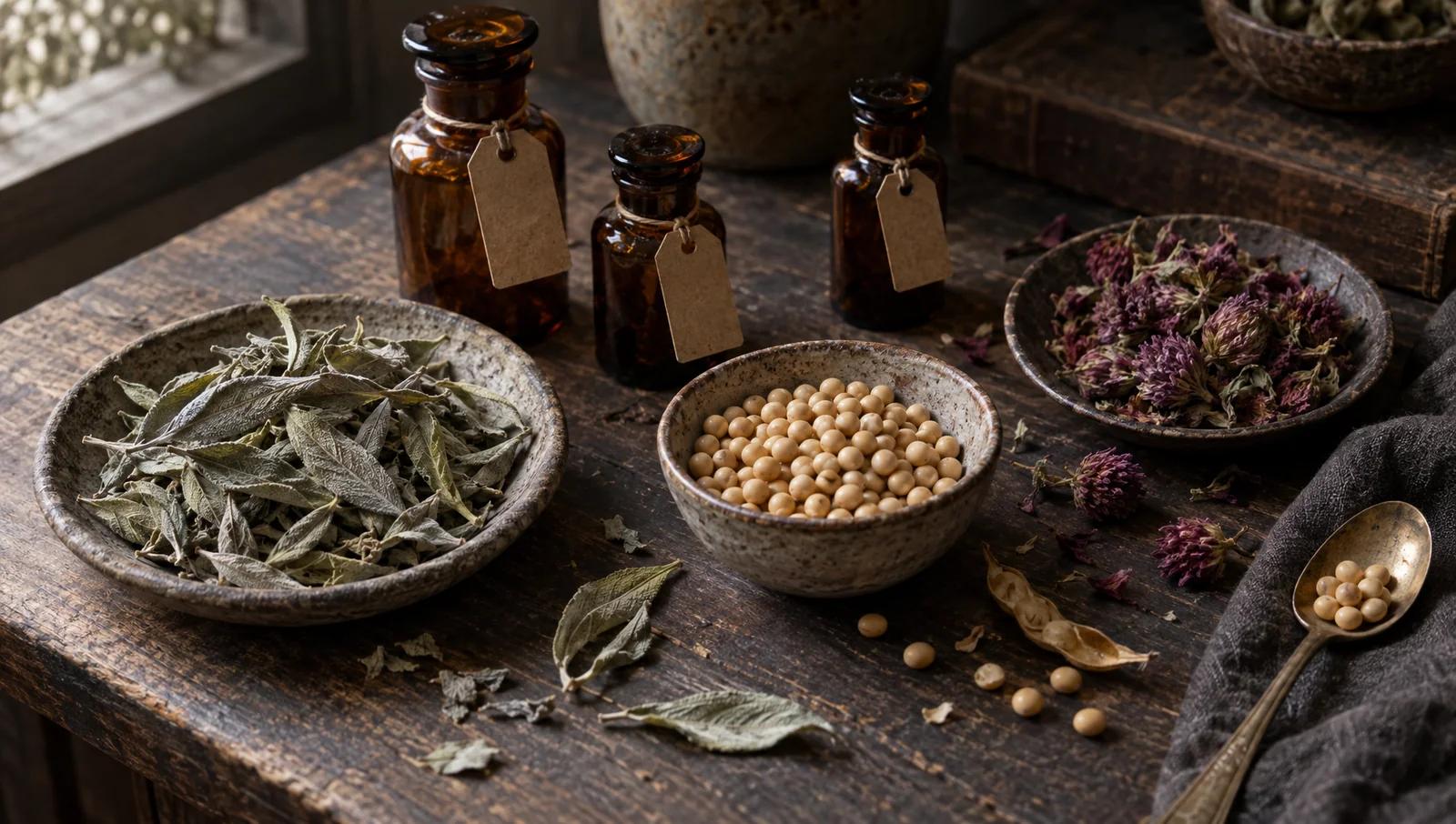
Many herbal products are marketed for menopause, including black cohosh, red clover and evening primrose oil. NCCIH's review finds little good evidence that most of them work better than placebo, and some carry risks: black cohosh has been linked to rare cases of liver damage. If you want to try one, tell your doctor and pharmacist first, especially if you take other medicines.
A note of caution
See a doctor promptly about any bleeding after menopause (12 months without a period), very heavy or prolonged bleeding, or mood changes that affect your daily life. Hormone therapy isn't right for everyone, but for many women it's a safe and effective option, and the decision is worth making with good information.
The bottom line
Menopause isn't a hormone problem to fix with a test and a supplement. It's a transition. Move daily, protect your sleep, eat for your heart and bones, learn your triggers, and talk to your doctor about treatment if symptoms are getting in the way.