In Ayurvedic cooking, spices are rarely sprinkled on at the end. They're "bloomed" first, sizzled briefly in hot ghee or oil until they smell wonderful, and the fragrant fat then carries their flavour through the whole dish.
This all-purpose blend is one we keep in a jar by the stove through the colder months. It turns plain rice, lentils or roasted vegetables into something warming and fragrant in two minutes.
Directions for use
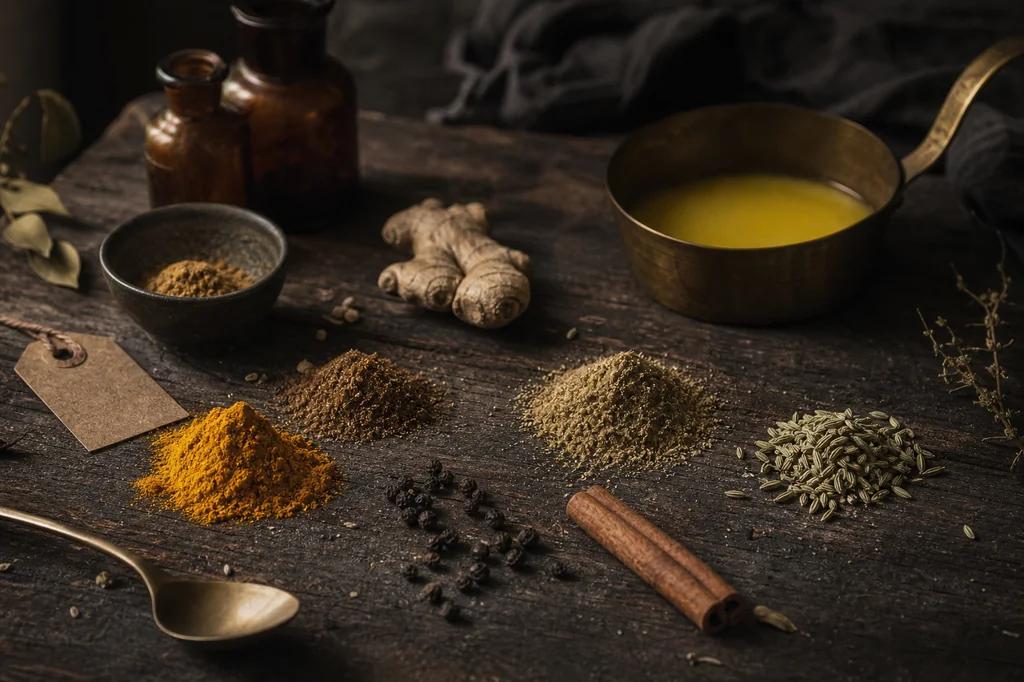
- The blend is turmeric, cumin, coriander, fennel, ginger, black pepper and a touch of cinnamon.
- Bloom 1 teaspoon in 1 teaspoon of ghee or oil for about a minute, then add to vegetables, rice, lentils or soup.
- Black pepper helps the body absorb curcumin from turmeric, and fat helps too.
- Spices don't prevent colds or cancer. What they do is make vegetable-rich, home-cooked food delicious, and that is where the health benefit lies.
The blend
The ratio is by volume, so use whatever measure suits the size of your jar: a teaspoon for a small trial batch, a tablespoon to last the winter.
For the freshest flavour, toast whole cumin, coriander and fennel seeds in a dry pan for two minutes, cool, then grind them yourself.
What each spice brings
Fennel. Sweet and gently liquorice-flavoured, fennel is traditionally used after meals to ease digestion and wind. It softens the bitterness of the other spices.
Coriander and cumin. The backbone of countless curries and dals. Both are traditional digestive spices with earthy, citrusy notes.
Turmeric. Gives the blend its golden colour. Its main compound, curcumin, has been widely studied for inflammation. NIH notes that the evidence in people is still limited, and curcumin on its own is poorly absorbed.
Black pepper. Contains piperine, which increases how much curcumin the body absorbs. Cooking turmeric in fat helps as well, which is one reason blooming in ghee makes sense.
Ginger. There's reasonable evidence that ginger eases nausea, including morning sickness. Dried ginger is warmer and sharper than fresh.
Cinnamon. A small amount rounds out the blend with warmth and sweetness.
About "immunity boosting"
The original version of this recipe promised to prevent colds and cancer and to balance hormones. We can't honestly repeat those claims. No spice has been shown to prevent colds or cancer in people.
What the evidence does support for getting through cold and flu season:
- Sleep seven to nine hours a night.
- Wash your hands often with soap and water.
- Eat plenty of vegetables and fruit: spices help here, because they make them taste good.
- Stay active and manage stress where you can.
- Get your flu jab and other recommended vaccines.
Where spices genuinely earn their place is in making simple, plant-based home cooking so good that you want to eat it every day.
Ways to use the blend
- Roasted vegetables: toss cauliflower, carrots or squash with oil and a teaspoon of the blend before roasting.
- Dal and lentil soup: bloom a teaspoon in ghee and pour it over just before serving.
- Rice: stir into rice as it cooks, with a pinch of salt.
- Eggs: add a pinch to scrambled eggs.
- Yoghurt dip: mix a little bloomed blend into thick yoghurt with lemon and salt.
A note on ghee
Ghee is clarified butter, with the milk solids removed, so it tolerates higher heat than butter without burning. It is still a saturated fat, so a teaspoon per portion is plenty. Olive or rapeseed oil works well too.
A note of caution
Culinary amounts of these spices are safe for most people. Turmeric or curcumin supplements are different: they can interact with blood thinners and some other medicines, and have been linked to rare liver problems. Talk to your doctor before taking them. Some imported ground turmeric has been found to contain lead, so buy from a reputable brand.
The bottom line
This spice blend won't make you immune to colds. It will make your vegetables, lentils and rice taste wonderful, and eating more of those is one of the best things you can do for your health through the winter.