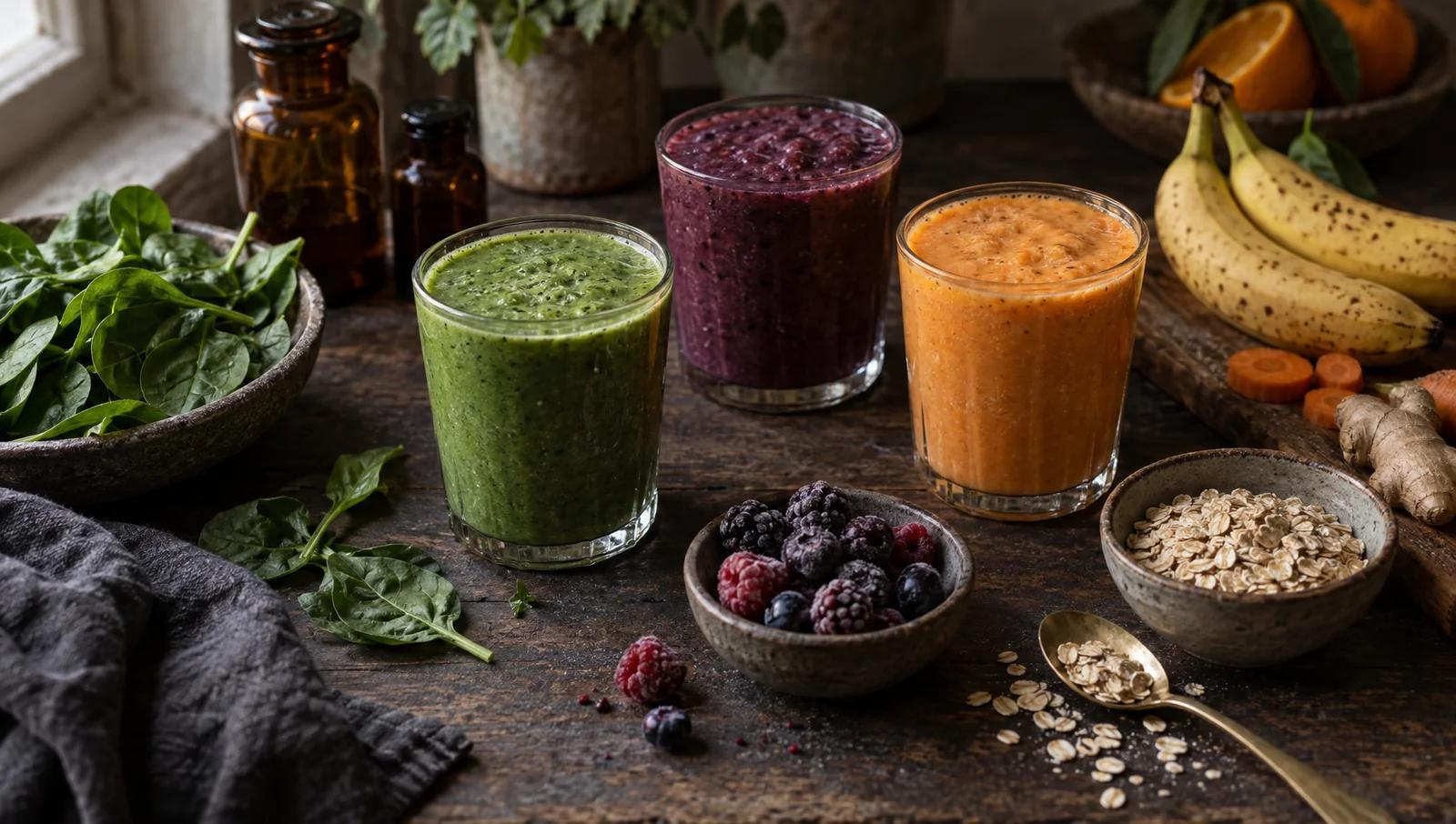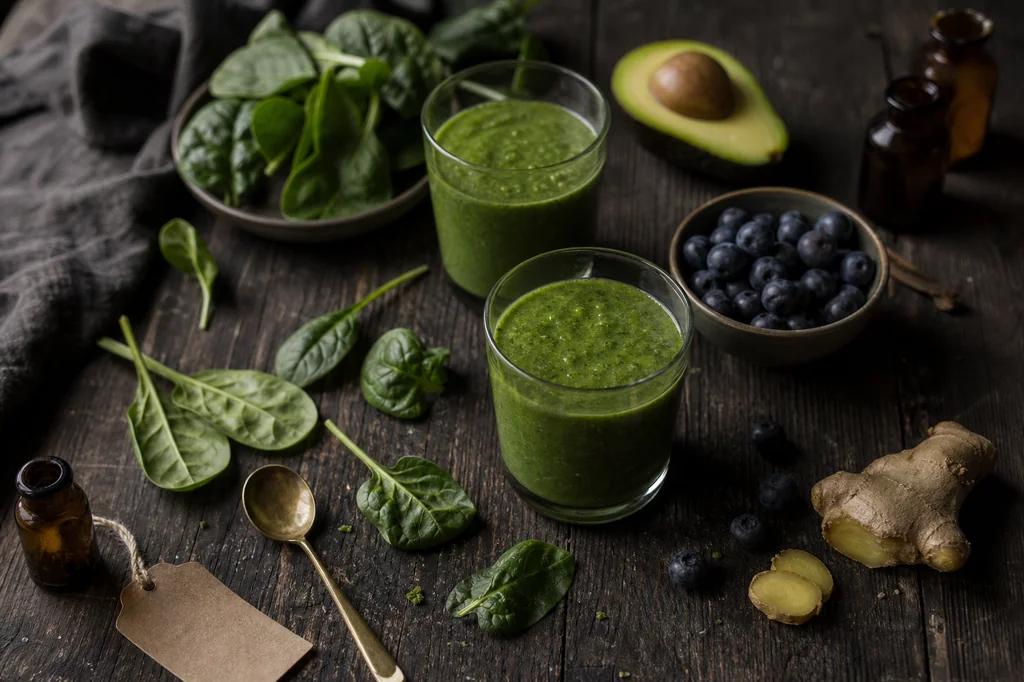
A green smoothie is one of the easiest ways to get a couple of servings of leafy greens into a busy morning. But many recipes are really fruit juice with a few spinach leaves thrown in: sweet, thin, and you're hungry again by ten o'clock.
These three recipes are rebuilt to hold you until lunch. Each has greens, whole fruit, and something to slow things down: protein, healthy fat or fibre-rich seeds.
Directions for use
- Use whole fruit and water or milk as the base instead of juice. You keep the fibre and cut the sugar.
- Add protein and fat (yoghurt, seeds, nut butter, avocado) so the smoothie keeps you full.
- Greens bring potassium, folate and vitamin K. Potassium helps offset salt's effect on blood pressure.
- Spinach and kale rank high for pesticide residue: wash them well, or buy organic or frozen.
The formula
Once you know it, you can make endless variations:
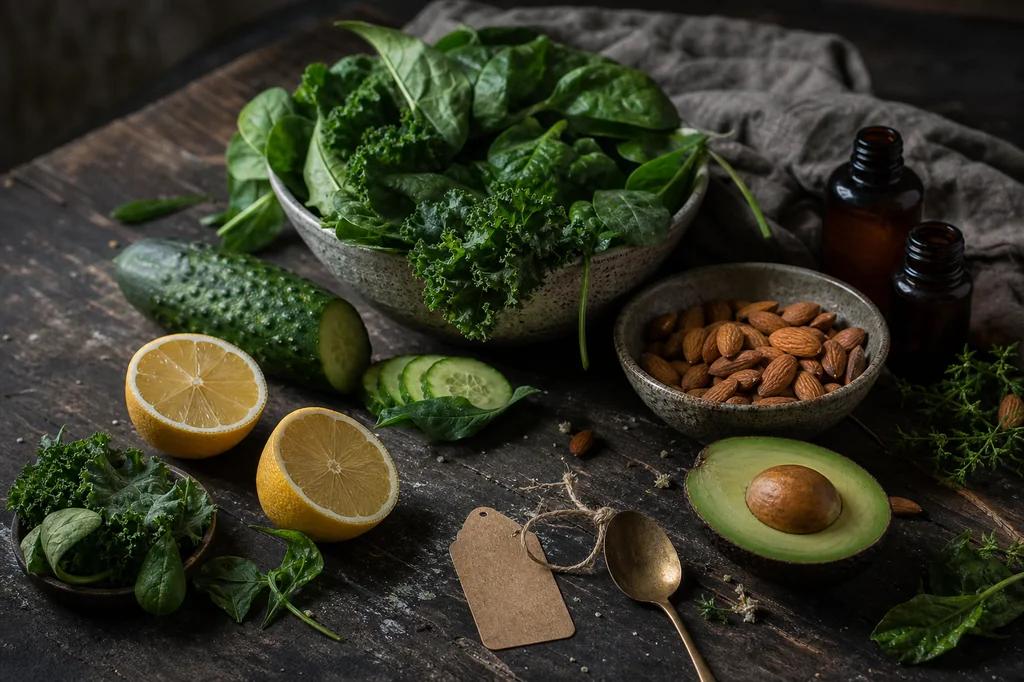
- Greens: two big handfuls of spinach, kale or chard
- Fruit: about 1 cup, fresh or frozen
- Liquid: ¾ to 1 cup water, milk or unsweetened plant milk
- Protein or fat: Greek yoghurt, seeds, nut butter, avocado or silken tofu
- Flavour: ginger, lemon, cinnamon, mint or parsley
Frozen fruit makes a smoothie thick and cold without ice. Blend the greens with the liquid first, then add everything else, for the smoothest result.
1. Berry and spinach
Berries are among the most fibre-rich fruits, and the seeds add protein and healthy fat.
2. Papaya, carrot and avocado
The avocado makes this one creamy and filling. Papaya and carrot bring beta-carotene, which the body turns into vitamin A, and the fat helps you absorb it.
3. Pear, pineapple and collard greens
Ground flaxseed thickens the smoothie and adds fibre and omega-3 fats. Pineapple and kiwi bring plenty of vitamin C.
What green smoothies can and can't do
Blood pressure. Greens, bananas, avocado and many fruits are rich in potassium, which helps your body balance sodium. Diets high in potassium from food are linked with lower blood pressure.
Weight. A filling smoothie can be a good breakfast or snack. But blended calories add up quickly: a smoothie made with juice, lots of fruit and sweeteners can top 500 calories. Keep it to one generous glass, and build it on greens and whole fruit.
Headaches. The original version of this article promised relief from headaches. We've dropped that claim; there's no good evidence for it. If headaches are frequent, see your doctor.
Chew some of your greens too. Blended greens are good. Whole vegetables, which need chewing, tend to be more filling.
A note of caution
If you take warfarin, keep your intake of leafy greens (which are rich in vitamin K) steady from day to day and talk to your doctor before making big changes. Spirulina and other algae powders can be contaminated if poorly made; buy only from reputable, tested brands, and avoid them in pregnancy unless your doctor agrees.
The bottom line
A well-built green smoothie, with greens, whole fruit, and some protein, fat or seeds, is an easy way to eat more vegetables before 9 a.m. and stay full until lunch.